A popular theory among AI optimists is that as intelligence becomes abundant, the cost of everything else will plummet. If AI can design products, optimize logistics, and run robotic manufacturing, the marginal cost of basic goods (food, clothing, housing) could approach zero. Some borrow a phrase from early nuclear power: goods become 'too cheap to meter.'
But there’s a paradox. The same automation that drives prices toward zero can also erase the jobs people rely on for wages. If human labor is no longer the engine of production, income may fall or vanish across whole sectors.
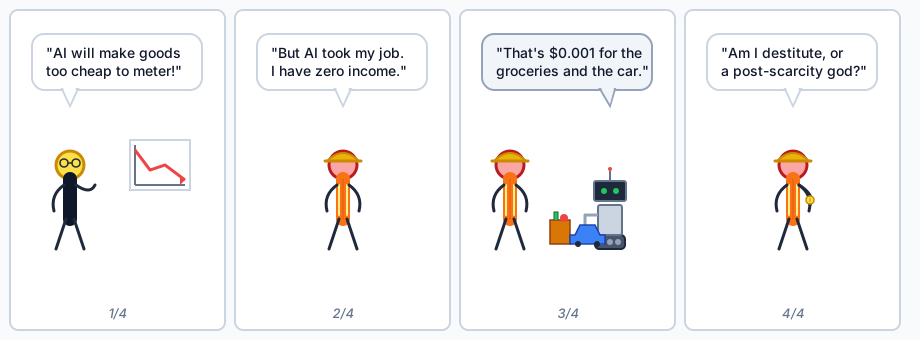
So what happens when you have zero income, but groceries and a new car cost a fraction of a penny? Are you destitute—or post-scarcity rich? This strip explores the awkward transition where both wages and prices collapse.
If AI makes goods practically free but eliminates jobs, are we broke or living in a post-scarcity utopia?
It's a phrase originally used in the 1950s to describe the hope for nuclear power. In the context of AI, it means the cost of producing intelligence, and subsequently physical goods, becomes so low that it's not even worth tracking or charging for the marginal unit.
By replacing expensive human labor in design, logistics, and manufacturing, the cost to produce goods plummets. When production costs drop, prices usually follow, leading to massive deflation.
If goods cost almost nothing, but human labor is worth nothing, traditional capitalism breaks down. People might have no jobs and no income, yet still be able to afford a high standard of living because survival goods cost pennies. It forces society to rethink how resources are distributed (e.g., Universal Basic Income).